luminarforge.
Pricing Compare Trust Log in Start free
The print room — the content operation for agencies

One design. Every client’s brand.

Luminar Forge gives every client a workspace with its own brand brain — and a template library where one design re-renders in any client’s brand: their palette, their type, the right logo variant, their contact block, text contrast computed to WCAG. The plate never changes. Every impression matches the client.

Start with 2,000 free credits See the rate card

No card · No trial countdown · No per-client fees

Plate № 07 — edition of ∞
Fig. 1 — Plate № 07, hung with four impressions Swapped on every render: palette · type · logo · contact · contrast
Logo — light / dark picked per surface
Kicker — brand accent
Headline — brand display font,
contrast computed to WCAG
Contact — filled from the workspace
Plate № 07 — “The Quiet Cost” Master keyline · holds the layout, never the brand
Meridian Freight
Field notes — № 12

The quiet cost of doing it by hand.

meridianfreight.com Read →
Impression I — Meridian Freight 101D2E · 3D5C80 · grotesk caps · logo light
Alma Skin
Field notes — № 12

The quiet cost of doing it by hand.

almaskin.co Read →
Impression II — Alma Skin F4EDE7 · A85B4C · serif italic · logo standard
Cortex Analytics
Field notes — № 12

The quiet cost of doing it by hand.

cortexanalytics.io Read →
Impression III — Cortex Analytics FFFFFF · 2B5CE6 · grotesk · logo standard
Kettle & Crane
Field notes — № 12

The quiet cost of doing it by hand.

kettleandcrane.coffee Read →
Impression IV — Kettle & Crane FAF3E3 · 4A2C1A · mono · logo standard

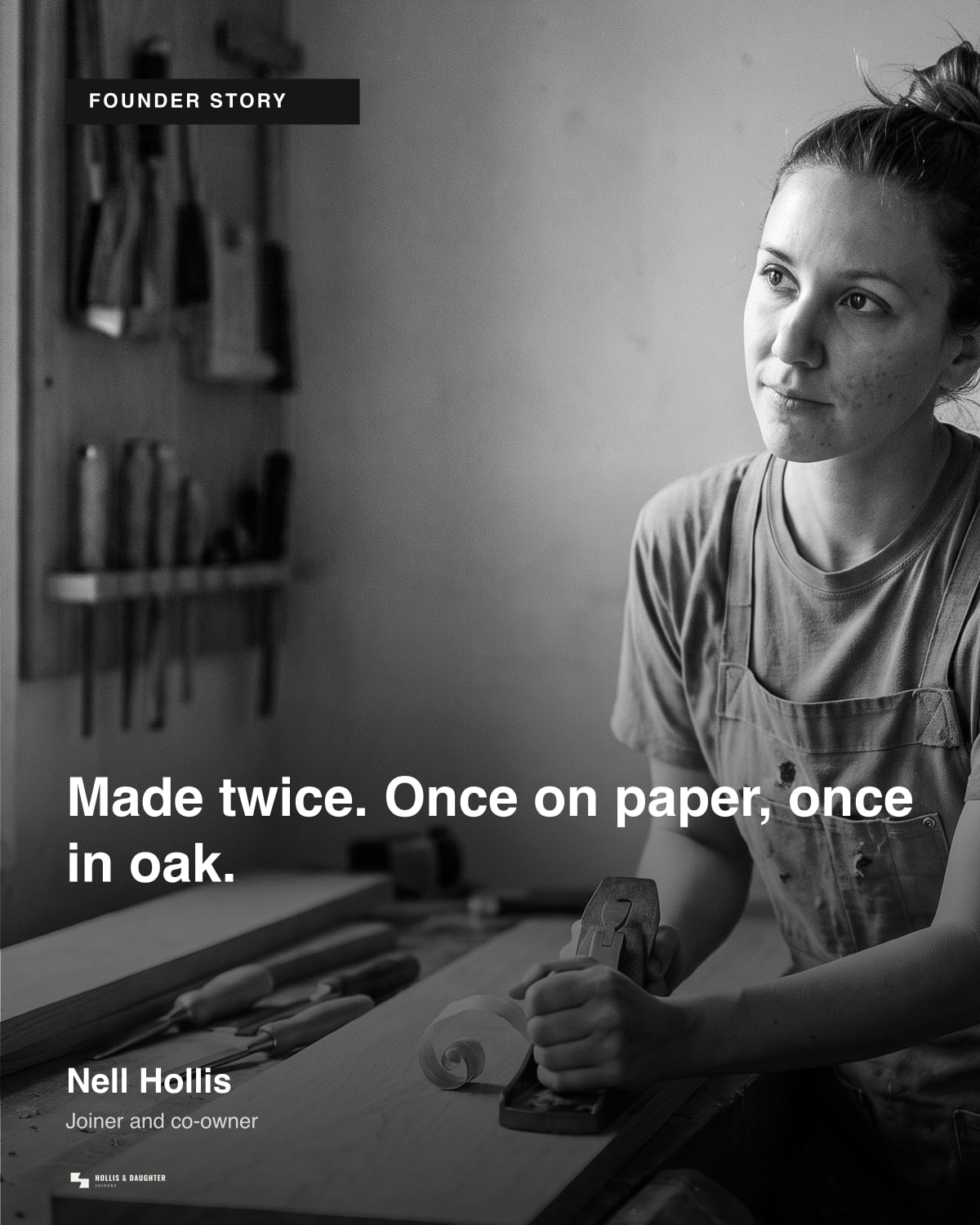
One plate, printed into four client workspaces. Colours, fonts, the light-or-dark logo and the contact block swap automatically, and text colour is computed against every surface it lands on. This runs live in the product — you are looking at four outputs of the same design.

The press — brand-adaptive templates

The plate never changes.

Every template in your library is brand-aware. Add a client, paste their URL, and the same design comes back in their identity — correctly. Five substitutions happen on every render:

Design it once. Nothing is ever re-drawn.

Runs in every client workspace, on every plan

Fig. 2 — swapped per impression

01

Palette

Pulled from the client’s brand tokens — not eyedropped, not approximated.

02

Type

Display and body faces swap to the client’s own fonts.

03

Logo

Light or dark variant, chosen to suit the surface it lands on.

04

Contact block

URL, handles and details filled from the client’s workspace.

05

Contrast

Text colour computed to WCAG against whatever it sits on. Legible by construction.

01
The press floor · Station 01 — the brand brain

Every client starts as a docket.

Paste the client’s URL. The Forge reads their site and structures it into a working knowledge base — positioning, personas, and a voice profile learned from how they actually write. Every station downstream sets from it:

  • Writers write in their voice, not a house style with the client’s name swapped in.
  • Image directions ground in their world — their customers, their settings, their product.
  • Templates pull their palette, type and logo the moment the workspace exists.
Job docket — new workspace Nº A-114
Client Alma Skin
Source almaskin.co — pasted, read, structured
PositioningStructured ▪
PersonasDrafted ▪
Voice profileLearned from published copy ▪
Palette · type · logo variantsOn file ▪
Brand brain — on file
02
The press floor · Station 02 — the writing room

Six hands set every line.

Bench 1
Strategist

frames the angle

Bench 2
Writer

sets the draft

Bench 3
Editor

tightens the argument

Bench 4
Humaniser

breaks the machine cadence

Bench 5
Condenser

cuts it to the platform

On call
Improver

reworks whatever the gate sends back

The quality gate

Every draft is scored on eight dimensions and either passes or goes back down the bench — not out the door. What reaches the calendar has survived the inspection.

8 dimensions · pass / fail

↩ a fail returns to the bench for rework

Passed — quality gate
03
The press floor · Station 03 — the image desk

React to sketches, not a blank box.

Dir 01In their world
To press →
Dir 02Founder, close
Dir 03Product in scene
Dir 04The unexpected angle
  • Sketch first, art-direct second.

    Up to four low-fi directions, drawn from the client’s brand brain. React, push back, or mix — the press renders the one you choose at full quality.

  • Real founders. Real products.

    The client’s founder appears in imagery from two reference photos — with their permission on file. Their product, from one.

  • Re-Text repairs the type.

    When the text inside a generated image is wrong, Re-Text finds it and fixes it — instead of rolling the whole picture again.

04
The press floor · Station 04 — operations

One calendar runs the whole floor.

Schedule board — “Quarter Notes” · Meridian Freight Campaign · pillar mix enforced
Phase — ramp-upWk 1
MonTueWedThuFriSatSun
Insight
Case study
◆ Client call
Product
Phase — launchWk 2
MonTueWedThuFriSatSun
Launch post
Founder note
Insight
Product
◆ Review call
Insight  ·  Proof  ·  Product ◆ Client-call milestones sit on the same calendar as the posts
Roles

Account-manager roles are scoped per client and enforced server-side — the right hands touch only the right work.

The ledger

Every credit is logged against the client that spent it and exports to CSV. Bill it back, line by line.

The wire

Publishing is LinkedIn native today, with Instagram & Facebook rolling out. Posts leave the floor formatted for the feed they land in.

The vault — how client work is kept
01 — Separation

Fenced at the database

Postgres row-level security on every tenant table. Client data is separated below the application, not by it.

02 — Encryption

Keys sealed at rest

API keys and tokens are encrypted with AES-256-GCM and decrypted only in memory, at request time.

03 — Exit

Leave with everything

One-click full export of your work — and deletion that actually deletes.

The rate card

Plain rates, hung in full.

Every plan has every creation feature. Agency adds the authoring surfaces — Template Studio, the AI campaign planner and account-manager roles.

Tier 01
Solo
$29/mo
3,000 credits / mo
1 workspace · 2 seats

For the one-person shop.

Tier 02
Studio
$79/mo
15,000 credits / mo
3 workspaces · 10 seats

For the small studio finding its rhythm.

Tier 03 Most agencies
Agency
$199/mo
50,000 credits / mo
10 client workspaces · 25 seats
≈ $20 per client / mo

The full room: adds Template Studio authoring, the AI campaign planner and account-manager roles.

Tier 04
Enterprise
$499/mo
BYOK — your own API keys
No credit pool

Bring your own keys, run your own volumes.

Credits are the only meter — one pool, any client · 2,000 free at signup · no card · no trial countdown No per-client fees. Ever.

The last sheet — Plate № 07, still uncut

Pull your first proof.

Paste a client’s URL and the print room builds itself around their brand — the brain, the bench, the plates. 2,000 free credits at signup.

Start with 2,000 free credits See the full rate card

No card · No trial countdown · No per-client fees

luminarforge.
LinkedIn-native today · Instagram & Facebook rolling out
Features
AI Pipeline Voice DNA Campaigns Templates AI Imagery Publishing SEO Hub AI Suggestions
The press floor
The hang The engine The stations The vault Rates
Catalogue
Pricing Compare Trust & security Start free Log in
Company & legal
Contact Terms Privacy Cookies

The print room is set in Clash Display, Switzer, Fraunces & IBM Plex Mono — free faces, all. Printed in two inks: paper F6F1E6 under ink 1E1812, with coral E05A4F kept from the house palette. Client colour appears only inside the impressions — that is the point of the product. © 2026 Luminar Works. The content operation for agencies.