luminarforge.
The print room What swaps The stations Rates Log in Start free
The plate library — brand-adaptive templates

One design. Every client’s brand.

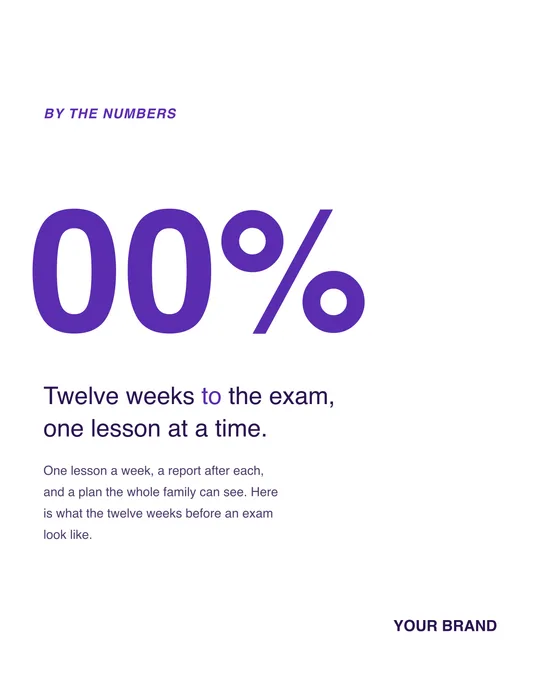
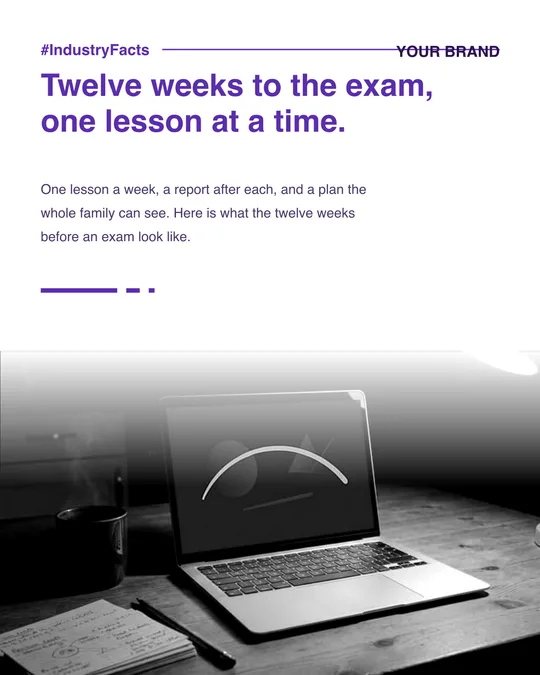
This plate stores the brand as tokens, not baked values. Press a client and watch it re-render — their palette, their type, the right logo variant, their contact block, text contrast computed to WCAG.

Go on — press a client. That’s the whole product.

Start free — 2,000 credits What just swapped ↓

Browse & compose on every plan · Author on Agency

The press — Plate № 07Edition of ∞
Meridian Freight
Field notes — № 12

The quiet cost of doing it by hand.

meridianfreight.com Read →
Resolved: surface 101D2E · accent 3D5C80 · ink FFFFFF · logo light · voice grotesk caps

This is the production token engine running live, client-side — the same code that renders templates in the product.

What are brand-adaptive templates?

The plate never changes. Five things do.

Ordinary templates bake one brand into the artwork — every new client means re-drawing. A plate resolves the brand at render time, from whichever client workspace opened it. And because text and logos live on the vector layer, they render exactly — no AI-image gamble on your client’s wordmark.

Canva templates are artifacts. A plate is a system.

01

Palette

Five slots pulled from the client’s brand tokens — not eyedropped, not approximated.

02

Type

Display, body and accent roles swap to the client’s own faces.

03

Logo

Lockup or mark, light or dark — picked to suit the surface it lands on.

04

Contact block

URL, handles and details filled from the client’s workspace.

05

Contrast

Text colour computed to WCAG against whatever it sits on. Legible by construction.

The press line — from gallery to finished post
Station 1Every plan
Browse the gallery

A growing catalogue, browsable category → style → size. Every new account opens with six plates already hung.

Station 2Every plan
Add to your library

Your copy is frozen at add — catalogue updates never silently change work you’ve already approved.

Station 3Every plan
Compose anywhere

Pick a plate at post creation — it opens already wearing the client’s brand. Nothing to re-draw.

Station 4Agency
Author your own

Design house plates in Template Studio, then promote them to every client workspace you run.

The plate finishes the post

Placeholders that know what goes in them.

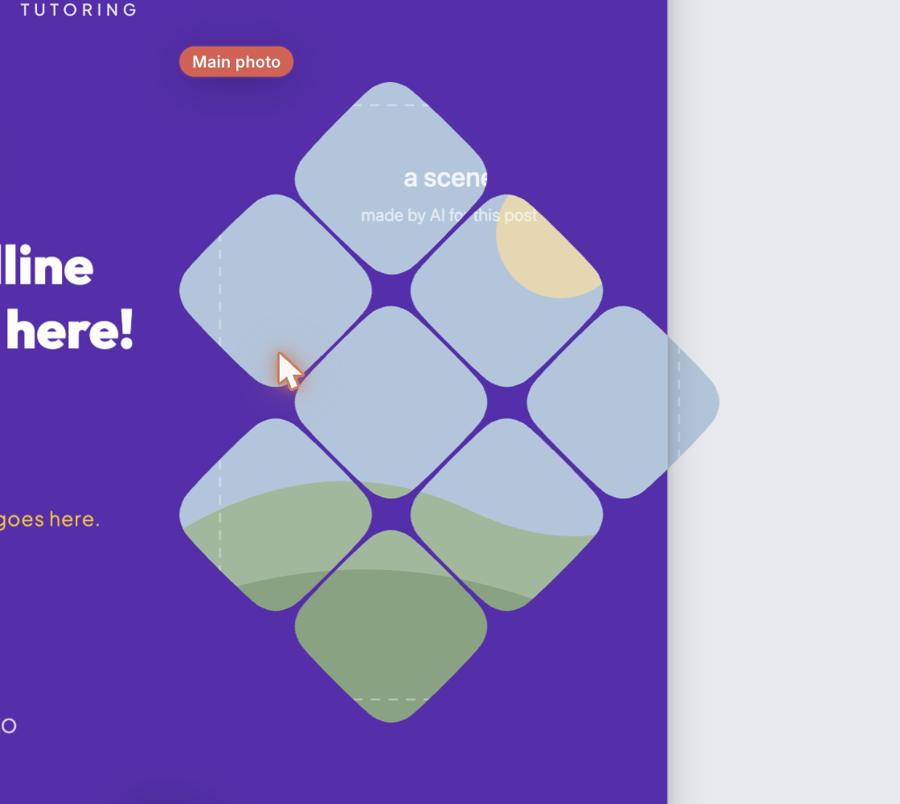
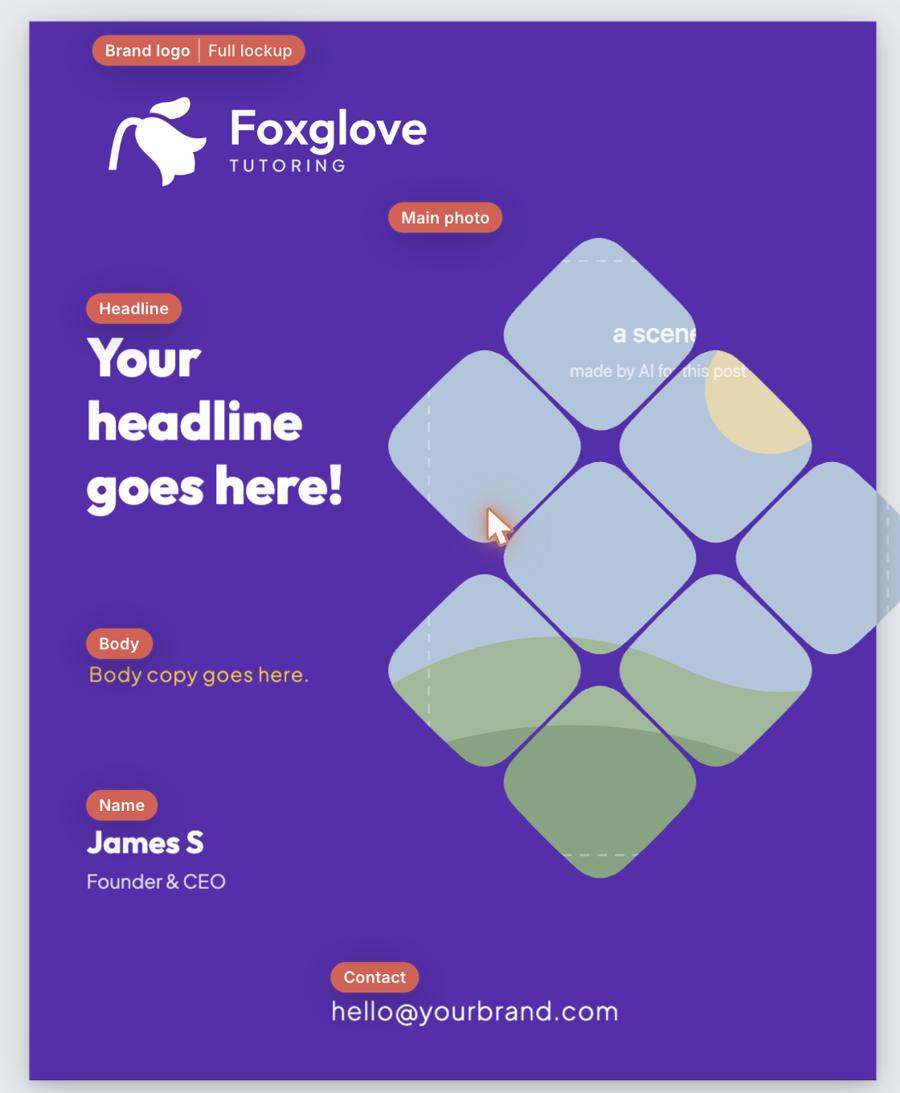
Every zone declares its content source. Compose a post and the card’s own copy pours in — headline to headline zone, pull-stat to stat zone (never a bare year), logo and contact from the workspace, and the AI image drops into the photo window clipped to its shape.

The launch bar for every catalogue plate: a finished post with zero manual edits.

Job ticket — auto-fill on compose
Headline · body · pull-stat · attributionfrom the post
Logo — variant per surfacefrom the workspace
Contact blockfrom the workspace
Photo window — clipped to the shapefrom the image desk
Zero manual edits
For the agencies that run presses
Template StudioAgency

A real studio, in the browser

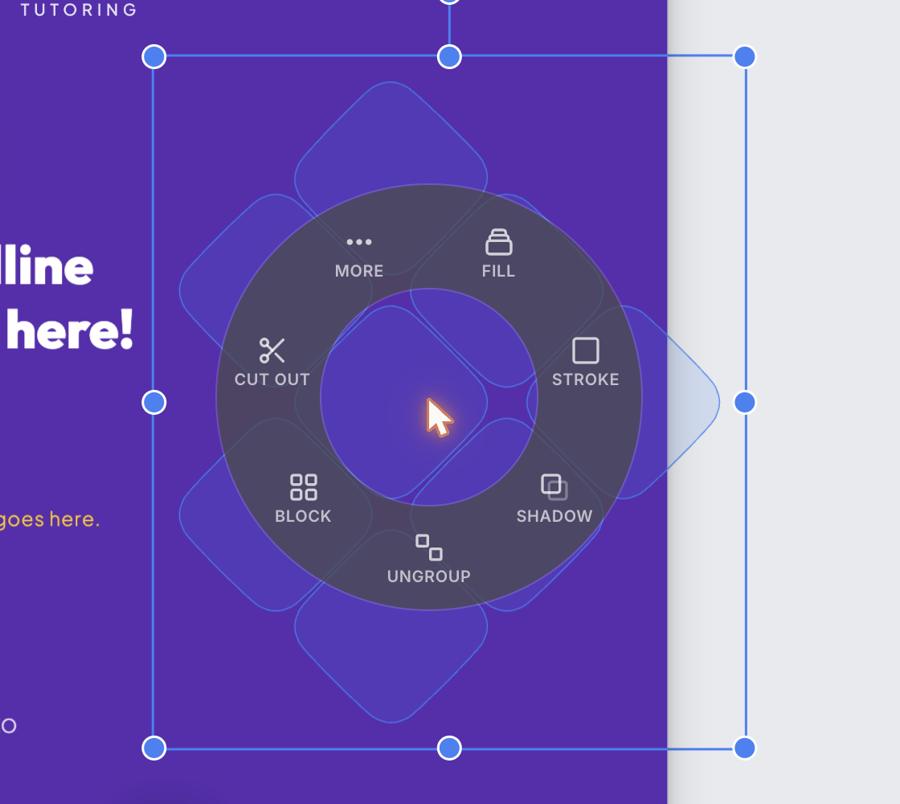
Pen tool, smart components, parametric charts, 339 bundled design assets — and one-click photo cutouts: right-click any shape, it becomes the photo window, the AI image pours in clipped to its outline. Same canvas engine as the composer.

CarouselsEvery plan

A whole series, one plate

Cover, content and CTA slides live in a single template — content slides expand to fit the story, every slide re-brands together. Ten slides is one decision, not ten.

DistributionAgency

House style, at scale

Promote a plate to every client workspace you run. When the original improves, each copy sees “update available” — take it or keep yours. Ship once, ten clients inherit.

Plain answers
What are brand-adaptive templates?

Templates that store the brand as tokens instead of baked-in values — five palette slots, three font roles, the logo in lockup and mark with light and dark colourways, and the contact block. Open the same template in any client workspace and it re-renders in that client’s brand, with text contrast computed to WCAG on every surface.

Which plans include templates?

Browsing the gallery, adding designs to your library and composing posts with them is on every plan. Authoring your own templates in Template Studio — and promoting them across client workspaces — is on Agency.

Does template text render exactly?

Yes — text and logos on a template live on the vector layer, so they render exactly, every time. That’s different from text inside AI-generated images, which is why the image and the design layer are kept separate.

The catalogue is young and growing — around twenty designs today, every one brand-adaptive. We’d rather hang twenty plates that re-render perfectly than a thousand that don’t.

Catalogue ships two sizes today · more size variants coming · compose on every plan · author on Agency

The press is warm

Hang your first plate.

Start free with 2,000 credits — add a plate from the gallery, open it in a client workspace, and watch it arrive already wearing their brand.

Start with 2,000 free credits See the rate card

No card · No trial countdown · No per-client fees

luminarforge.
LinkedIn-native today · Instagram & Facebook rolling out
Features
AI Pipeline Voice DNA Campaigns Templates AI Imagery Publishing SEO Hub
This page
What swaps The press line The rate card Compare
Catalogue
The print room Pricing Trust & security Start free Log in
Company & legal
Contact Terms Privacy Cookies

The plate library’s hero runs the production brand-token engine, live in your browser — the readout prints what it resolved. Client colour appears only inside the plate; that is the point of the product. © 2026 Luminar Works.